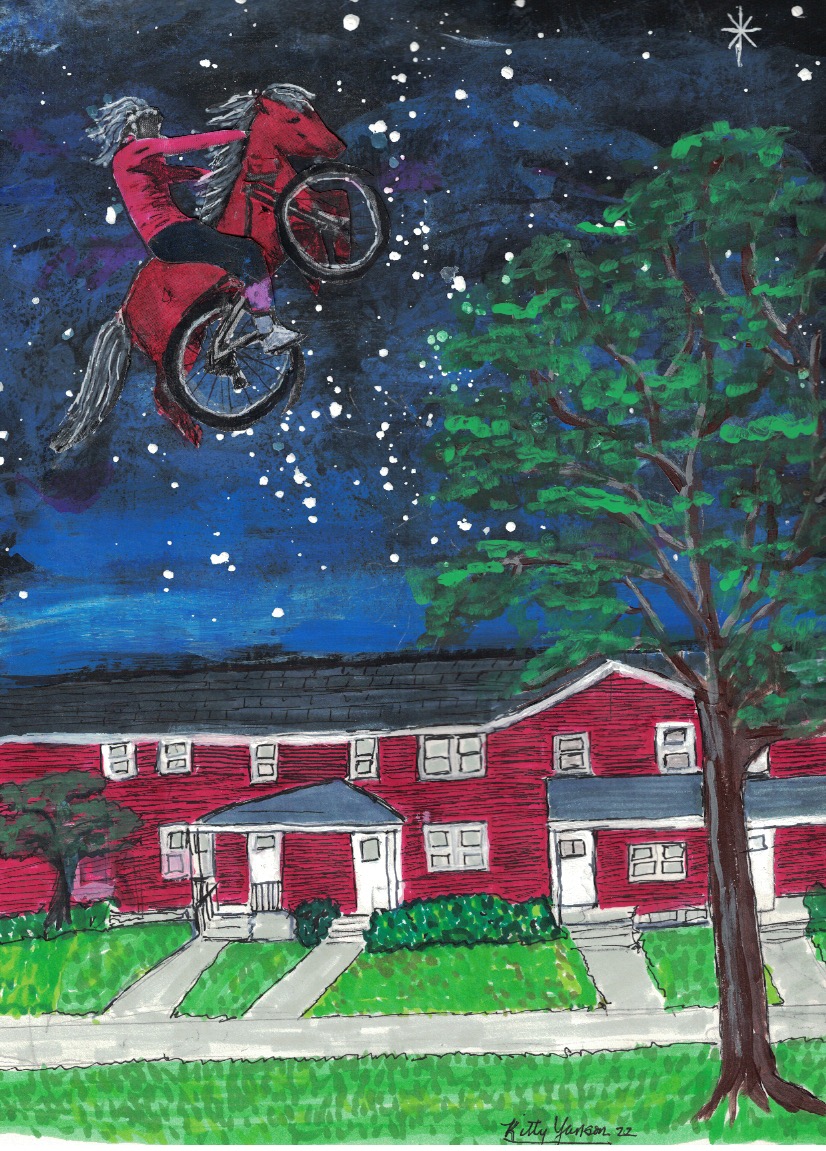
Mr. and Mrs. Bridge

Lisa Bridge unties her halter top
so the sun can play unfettered
her untempered clavicle
her shoulders’ rounded notes:
Allegra.
Mr. Bridge in his upstairs bedroom
watches his daughter on the lawn
through panes of old glass
that ripple like heat risen long-ago.
The tongue of her thigh parts
the wide mouth of her shorts.
Her hair in amber rebellion
falls in the indoor quiet
like sweat beneath white linen.
With her father just the day before
she practiced Juliet from the balcony:
Wherefore art thou Romeo?

It is August.
The afternoon is sullen.
Mr. Bridge makes love to his wife,
her curlers in rows of recapitulation,
her eyes wide as a daylight owl,
irises wild in an ungardened field,
their pupils, pinpoints
of a thousand doubts surprised mid-dance,
or none. Their sheets are stained
with silence and mown grass.

Mr. and Mrs. Bridge will go
to Paris to view the Louvre.
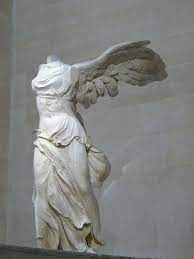
He will admire the Winged Victory.
For the sake of tradition,
he will bury his daughter
wrapped in tea and burlap
until she, too, has no arms and head,
appearing ancient and all wings,
on the lawn, a gift for his wife.

Mrs. Bridge will join an art class
and paint a woman standing
calmly in the ocean’s surf,
holding a swan of Dresden china.
She has no feet.
Outside the gilt
of this portrait’s frame,
the firebombing has begun.

-Kitty Yanson

Proofing the Generations

In memory of my mother, gone and ungone.

In the back of the pantry, behind the oatmeal,
to the right of the dried milk and cans of pencil stubs,
on a willow-ware plate,
my mother lives
beneath a blue glass bowl.

I watch her brew beneath the glass and wait
for her to storm the surface with her flesh,
impress against its imperfections, cracks
and chips. She’ll crawl into arms of spider galaxies
to grout her sky with great clouds of self.
She will rise
until the horizon breathes to her rhyme,
balanced like a babe on her white hip.

My fingers sink hollows that do not heal
into her round skin.
Dinner’s at eight.
The table is set,
butter knives sharpened for this occasion,
heavy with need, thick with expectation.

But she rises still, breeding beyond her promise,
rebellious as a heartbeat,
sticking to the roof of my soul,
beyond the prying of my words.

-Kitty Yanson

A Sort-Of Love Poem

This poem is not your regular erotic;
The usual metaphors of fruit and flowers,
the sweetness of vegetable amours,
do not apply: we are not viney lovers.
No, we see used moonflowers, limp
on the concrete at dawn and laugh
at their resemblance to condoms killed.
Venus does not rule here, but Mars.

You lean close to my ear and the whisper
of my name becomes an arrow hissing
by my cheek. You bury lightening strikes
into my earth; I break open, a gibberish of breasts
and mouth against the volley of your fingertips
and blasts of deprivation,
and, alas, my wide wound weeps
with glowing sorrow.

Infiltrate, dear enemy. Bury your dead deep
behind my lines, and then, perhaps, wild grape
will grow to mark our mutual surprise.
Later, when the sun comes again through
the stained glass window to scar the wall
above my bed with blue light,
surely, our peace will be stained
with strong blood metaphors, oh, my sudden soul,
is this birdsong?

-Kitty Yanson

my reading

Doctrine of Correspondences

Things rhyme at night;
images in dreams repeat
with only minor variations–
a shift in light,
a different parking hardscape
in which to lose my bright red car,
another subject flunked in high school–
Spanish or algebra–
to redress in the brown serge skirt
and catholic saddle shoes,
a fifty-year-cold remediation.
The penance over, I can slide again
behind the podium to teach
the terza rima and perfect numbers
in Dante’s vision of a balanced hell:
hypocrites wear unbearable brocades
with leaden threads. and desire-blown
lovers, in solo circles, embrace
the nothingness of emptied hearts:
the punishment fits the crime”
The Doctrine of Correspondences.

In daylight, does our living also rhyme?
Does the living fit the living
in the stages of our lives?
I think it does. The childhood table
I burrowed into books beneath
becomes my unlit Sundays encaved
in work and grading student papers.
But now I’m old and do not want
to hide from the fading sun that
crawls across my living-room floor.
Instead, I count and match the shadows cast
against the wall to corresponding names–
of fear and hurt, of wounded heart and anger–
and dare the many tongues of the inner fire,
to speak a doctrine of my fierce completion
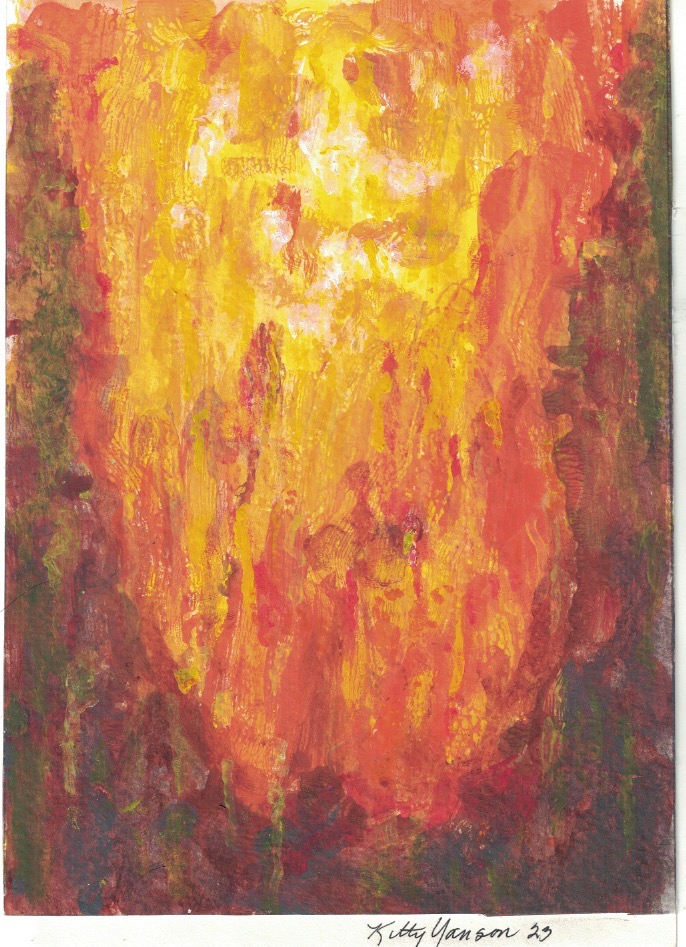
in one clear voice: conflagration.
-Kitty Yanson

Me reading.

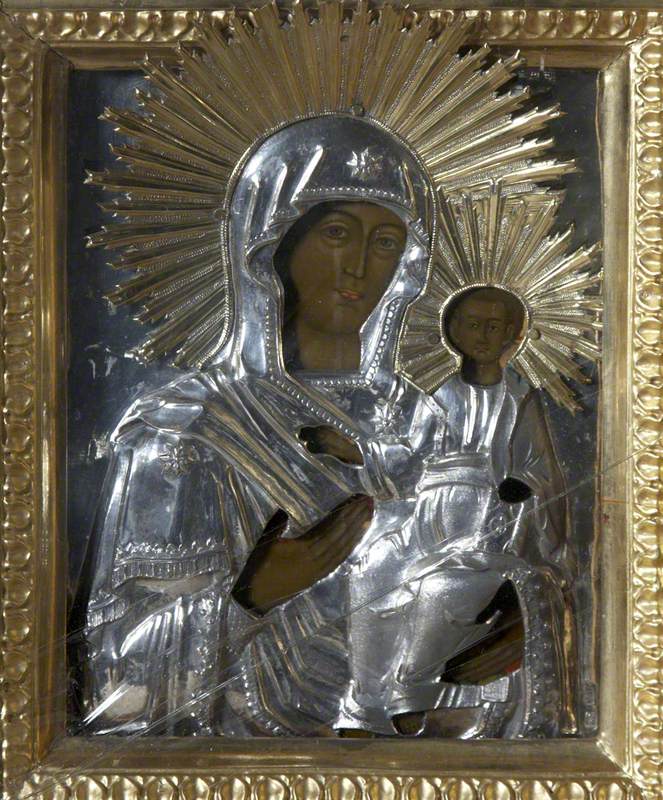
Dark Madonna

She knows in whose boredom the sun sleeps.
She studies space, fixes images in their absence,
hangs portraits the masters never saw
in their crafty light, interrupts the talk
of dragonflies attending all creation.
She is the holder of pain, the unmoved target.

I wonder who this woman is
who moves as separately as silence,
who pauses to applaud a renegade dogwood,
red, in still-green autumn, understands
the bloody revolution of ticking clocks,
the second-hand arrows that pierce
the flesh but leave it whole.

I hear her coming. She whispers to me
between the folds
of perception:
You will believe:

There is nothing left
but love.

-Kitty Yanson

Vigil

I
On the bed she seems blown
into adjustable corners,
a dropped marionette.
Her breath folds over and in:
like yellowed silk, it cracks
into powder at the creases.
You do not look.

You tell her there is a lake
outside she has not seen
that slinks in the sun,
an unrolled bolt of blue fabric,
where a lone gull flies, taut as a grin.
She seems indifferent.

Crocuses bloom beneath
the stone Maris Stella.
Yellow and purple, you tell her.
Yellow purple, she repeats,
her words fading as soon
as they’re struck,
a fast fading bruise.
Yellow purple.

She sleeps. You start to read
the paper of a student who
serves you signs of God
in Lord of the Flies on
intellectual toothpicks,
the appetizers of thought
for which you have no hunger.
Your pencil plies her lines,
a blunt instrument that you
put down in mercy.
Night comes. You wait.

II.
If you were still a child,
eyes of the Disney demons
would open in the window,
the buzz-saw eyes of the
reprobate Queen who would be
the fairest, the fairest of them all.
Once, in the darkened theatre
those eyes spiraled inward,
draining the mirror of its shine
ending all debate. Then they slashed
outward in reverse to stain
the Snow-White beauty with
ribbons of apple red. You ran to the bathroom,
closed the door like a blanket over your head,
and stayed until the music again played safe.
But in your bedroom in the dark
with constant crickets, those eyes broke loose
without warning, turning in, turning out.
You hid beneath the sheets, recycling breath
in small and smaller circles, turning in, turning out
your humid innocence until you could no longer.
You must inhale fresh terror
and pray for the Prince of Sleep.

If you were still a child,
a long-haired Captain would scratch at the glass
with his metal hook. He was the one who stole
unripened children from the heart-safes of trees,
made them stare at the inverse ocean, the swell
of obligation, then pushed them into fate,
into time, into the gullet of the ticking crocodile.
You ran to your mother who told you
that you would never die. It did not matter
that she lied; the truth of heartbeat was greater.

III.
The wind hooks leaves against the window.
Now demon’s eyes are chifforobe knobs
catching the light from where
the nurses pass. You life is now unanimated.
It is real.
The shift changes.

The woman on the bed now breathes
in shallow pants, a final labor: turning in,
turning out, the reel of her breath near its end
scratches at the unseen seam at its core.

Last night she told you that in a dream
she was a seagull high above her cousin’s shore,
above the castles ringed with sea nettles
drying their shine in the sand,
above the clouds transfigurant,
above the sheen of fish smocking the waves,
stitching them together with geometries of flame.

You told her that this dream revealed her flying soul,
free as her final child whose birth is near.
You held her hand.
You want this to be true.

-Kitty Yanson

Revision of Sleep

This winter’s unexceptional in its decay
the miscanthus has ceased its flagrant waltz,
and from the garden a golem
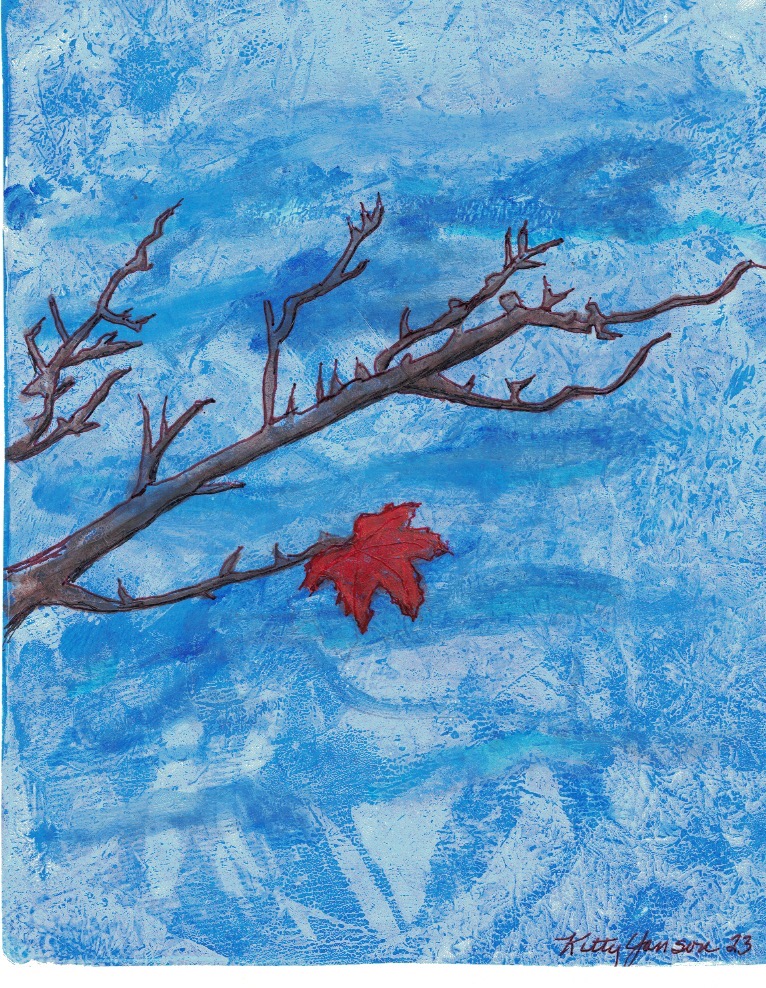
of dry grass rises. A single leaf dallies
in the sweet gum tree, and a crow,
like Rhadamanthus calls: Fall!

This time of deprivation I am used to.
I’ve found a trick for it:
when the seed lies underground,
before its maggot roots gnaw
deep to corrupt the earth with hope,
lie still: do not desire.

But this unexceptional season
won’t be stilled: the germ turns,
restless in its bed and dreams
of greatness, parting quadrants
of summer stars with irascible limbs.

I am struck awake by the cold bite
of your not-quite promises.
Buried in my silence, arms
of longing burrow beneath
the wet oak leaves.

You go again. The door closes.
I stand by the door exactly where
I saw you last. And for one slow
moment, I breathe the May air.

-Kitty Yanson

Long Pond

By the edge of Long Pond, rosa rugosa grow
in barbed, white lines beside the dunes. We tack
across the moors through troughs of heather, back
and forth. For autumn roses we walk below
the scrub pines crested high. Our pace is slow.
We trace the tangled path of tangled pacts
of quiet, circling our discontents with tact,
teeth bared in smiles that mask what we both know.

Our dogs, direct as children, flush arsenals
of pheasant wings–wild things attacking air
with stiletto pinions, bladed shrieks, and dread
in feathered laughter slips through protocols
of silence. Soon, we cut white roses and bear
them back, each alone, in daylight’s final red.

-Kitty Yanson

In Northwood

I.
Once shocks had cured and dried in contours of time;
this field had gathered whiles of corn in long,
curved rows. But the war and the drought of men ended.
Flash floods of housing ran off down this hill
in torrents, puddled into close, brick queues
and cement alleys with iron-barred storm drains,
the teeth of Moloch we as children fed
with relinquished sneakers, stuck like virgins bound
for the deep, wet furnace that fed Herring Run.

These alleys are my wilderness of dragon’s teeth
and cracked glass slippers, the bones in my mother’s back.
I ride my horse, Tzarina, there. Raucous hooves
are borrowed jokers clacking against her spokes;
for reins, frayed clothes lines tied to handle bars.
Through the stick-ball games, the den of boys beneath
the bridge, the wiffle-headed trolls, I spur
in circles, bend hell, hold my breath, and pass
their puppy stink that whirls from their heads like a smoke
of gnats. I dodge their litter and insults hurled:
“girl,” squashed tin cans, “turd ball.” Fast, clatter fast
down the alley, low in Tzarina’s deep sway, her mane
in my face, her mane as long as August flags
my face with humid air. Like Sunday car
wash water, rush, like whispered sins confessed,
forgotten prayers expelled in a hiss, rush, rush:
the storm drain waits to hear my story told.
Tzarina rears. Hooves turn and slice the sun
to crescents. I will go to heaven when I die.

II.
In Northwood, trees were chosen not for grace
or stateliness, color of bloom, or autumn leaves
but for speed, exuberant growth. Our maple, rank
as Hydra, devoured time, spat seeds, platoons
of wishbones groomed for flight, stripped clean of all
but wings and banzai war cries that whirred the name
of earth in silent troth. My father raked
siege lines, demanded his turf against the Spring,
against these dizzy kamikaze seeds.
Still, some escaped to infiltrate the thatch
or mined beneath the concrete slabs till June’s
slow sun touched off a blast of rootwork, called
to attention stems, blades ready, fixed, alert
to the exigent stand, the requisite shalt be, of trees.

I am traitor. I glean the walks, gather green
from hoods of cars, and raid my father’s heap
of vanquished enemies. Through my fingers I sift
seed-eyes, brows arched in questions that fly unasked,
unpeel their wrinkled lids, un-half their hopes,
eat them, stick them in my ears to hear the wind
as trees do–ocean swarms, shelled whispers trapped–
toss them, watch them spin, twist the whirl-a-gigs
in my hair and call the birds to nest. I make
chains, rosaries to hang about my neck,
pray mystery language swiped from gargled chants
of radio novena priests: hail, fulla grace,
the lurid’s with thee, blessib is the fruit of thy wound,
(nod) Jesus. Wedging seeds up my nostrils, I
become a cross-eyed alien, scream like a cat
with saber teeth so upcurled that when I nod,
I fork up dinosaurs: yes, I kill, yes, I sleep,
I am older than you, more violent, more real,
I am fiercer than shadows street lights force from night.
I will live forever: as long as even Spring.

III.
Some years my father, half accountant, half
a hero, hewed the maple’s head. He said
this was essential discipline to stay
its excrescence. While this giant, panoplied
with leaves, took hostage the harrowed summer sky,
my father sipped inadequate old-fashioneds
and swizzled ambered thoughts of two AM
in Saipan. The officers club: unfinished, undrunk
Jack Daniels, Johnny Walker Reds, the rum
and cokes, the Tanqueray gins with their juniper taint
of evergreen, their tinge of poison faint
enough to immunize, not kill, all mixed
to a punch, doled out to the pilots of rescue flights:
the remains of courage. He had been last called.
Home now, he exchanged his pilot wings for wood
saws, planned the strategic moment, watched
the autumn’s yellow peril fade, the day
of weakness, the tree’s double timed-death
in December. Then struck. Deposed, the maple endured
through winter, its frozen cyclone and hardened rhyme
of seeds exposed by the oval cut, now crowned
with tar. A dark fist clenching life, it raised
its sleeping challenge: Know before whom you stand.

IV.
In this tree’s hesitation, stars are spawn, unschooled
until my father’s Sistine finger calms
the obstreperous moon to trace across the black
construction-paper night the forms of cartoon
stick things, connecting dots in this puzzle book
in constellations. He takes my gloved hand, lines
my sight with his” “Polaris. That’s the North
Star. Find it and never lose your way at night.
See? It leaps from the cup like a bubble that stings
your nose, an effervescence. Orion’s there
with his club, a hunter chasing pigeons–girls
they were once, the Pleiades, seven sisters loved
so hotly, so hopelessly pursued that a star
was born in Orion’s armpit, Beteljuice,
the gleaming sweat of eternal war. And there
is Lyra, the harp of Orpheus, playing the gods’
stone silence, while the swooping eagle, Vega, tunes
the strings, ensnaring those who listen, who spy,
on gods, with ears against the door of night.”

In a room upstairs, my brother cries in straight
unyielding arrows until my mother bends
them, coaxes them with lullabies to curl
in her lap like willow withes. The Polish words
I do not understand, but I know the tale
her body speaks: the phrase of powdered warmth,
the grammar of arms, the syntax of fluent skin.
the order of breath, the spelling of pulse. I’ve walked
the labyrinthine passages, open courts,
the columned temples, the pillared caves of sleep
against her breast. The winding trail of dreams.
Outside alone, I look to find a tale
of crooning mothers, but legends always flex
in unrelenting waves among the stars,
the bones of heroes that led my father home.
They leave no pages blank, without a word
to colonize, to fill with inevitable fact
and purpose, destination. They’ve conquered night.
But I want these stars, against the darkened wall
like shattered apples, to cling with bits of bright
debris, an unswept vacuum, and all the stars
dissolved but one. North Star. In the crook of my sight
it’s the never-closing eye of my motherland,
now foreign: an ache, a throb, a small white cry.

-Kitty Yanson
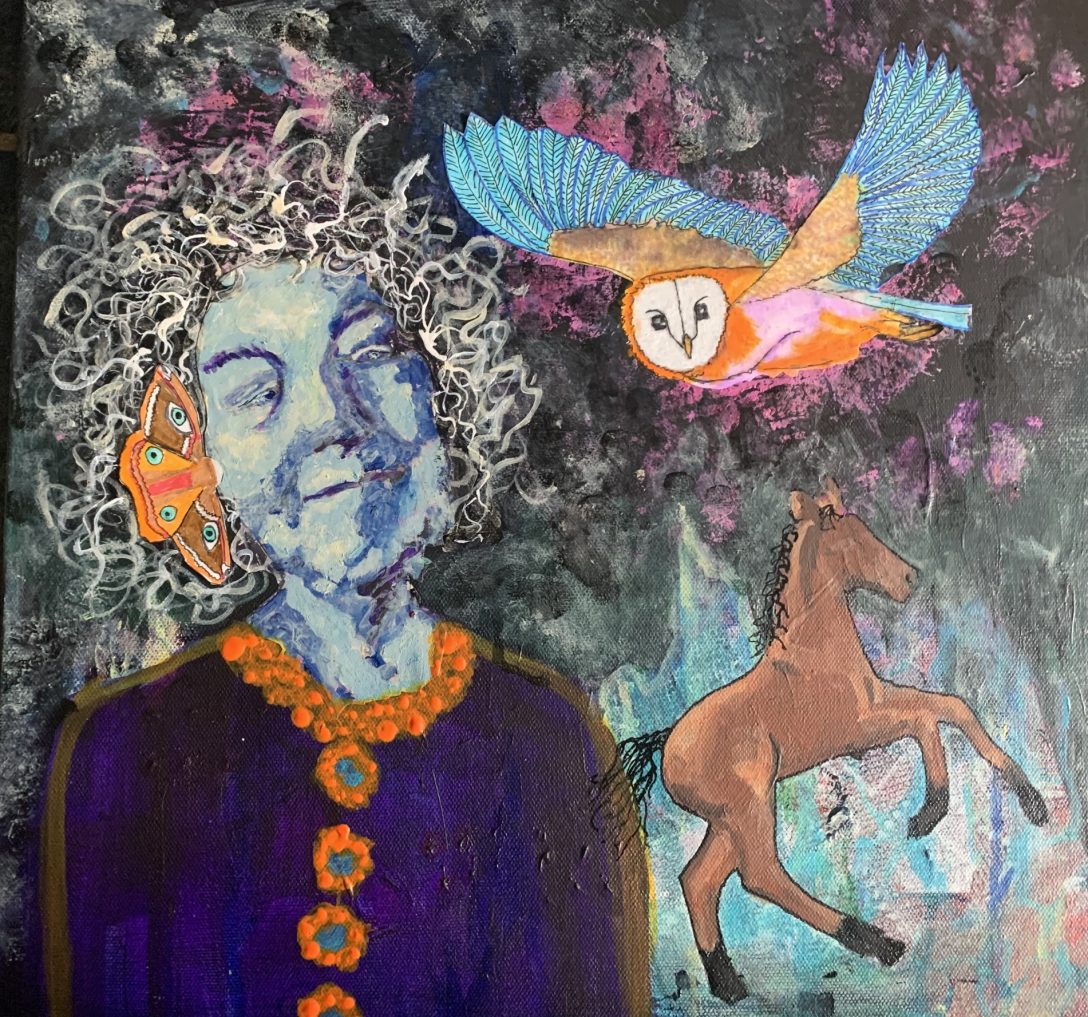


Boulder

We should have ended in Boulder, Colorado.
A place named Boulder sounds precisely bound
and self-contained. There trees would bleed no shadows
on the ground. A site so definitely nouned

would season quickly: leaves would snap in fall,
shear off, and drop like rocks; no subtle drift
to catch like a rotted pear in my throat and call
up dreams of flawless summers. Ends would be swift

and kind. In Boulder, time would hold no grey
and lonely voids for memory to fill
with breath; no twilights, no false dawns would stay
the final blow. Endings would strike once. And kill.

But they don’t. Each parting has a thousand strands,
Each over isn’t, each shattered boulder, sand.

-Kitty Yanson

My reading of “Boulder”