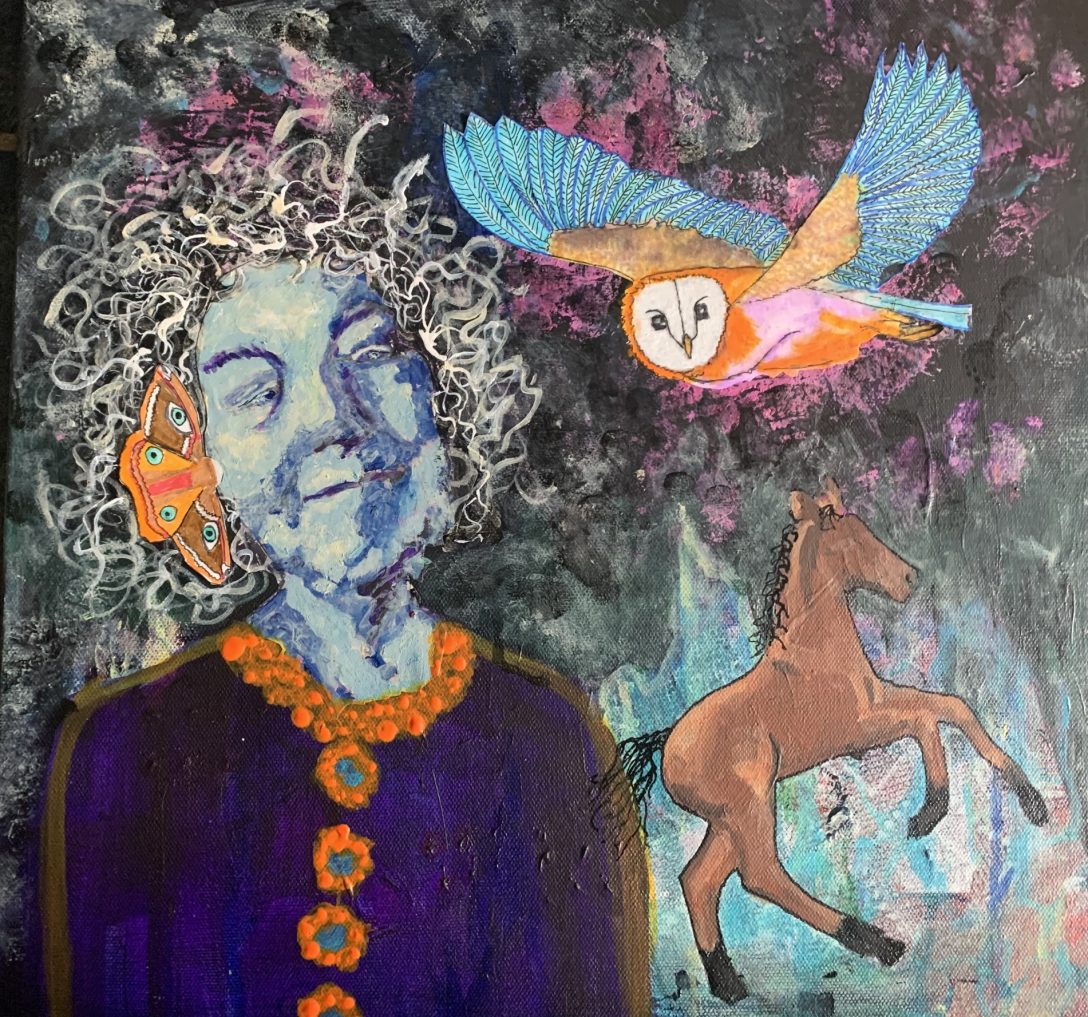


Dark Madonna
She knows in whose boredom the sun sleeps.
She studies space, fixes images in their absence,
hangs portraits the masters never saw
in their crafty light. Interrupts the talk
of dragonflies attending all creation.
She is the holder of pain, the unmoved target.
I wonder who this woman is
who moves as separately as silence,
who pauses to applaud a renegade dogwood,
red in still-green autumn, understands
the bloody revolution of ticking clocks,
the second-hand arrows that pierce
the flesh but leave it whole.
I hear her coming. She whispers between
the folds
of perception:
you will believe:
there is nothing left
but love.
-Kitty Yanson
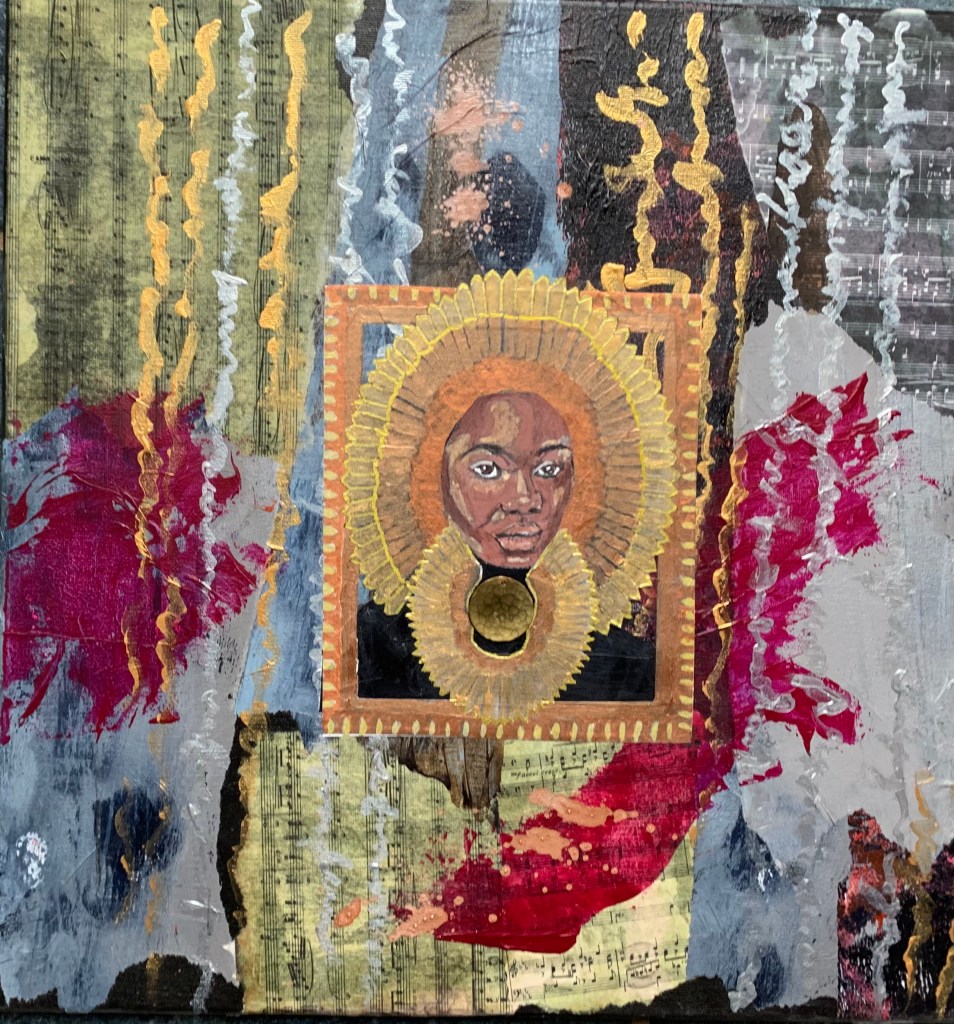
I first became acquainted with the Black Madonna sometime in the early 1980s after getting sober, after my divorce, when I was trying to get through depressive episodes without the liquid medication I had used to try to treat them. First, it was a picture of Our Lady of Czestochowa in my ancestral Poland which drew me toward her, then I searched out others, the Dark Madonnas of Spain, and the one enthroned in Chartres Cathedral. Eventually, I found that she was indeed an archetypal presence in the psyche, a sister of the Hindu Kali, the apocryphal Lilith, and the Egyptian Isis. In all of these forms, she embodies the union of opposites: life and death, spirit and matter, the conscious and the unconscious, body and soul. For me back then, she was the hope I had for healing and wholeness, and so she remains with me today, as I continue to find new ways to create while my body, beginning its 77th year this week, reminds me with a new ache every morning that mortality is destiny, a part of life. This image of this Great Mother, both womb and tomb, comforts me, sings me awake and to sleep in endless cycle of God. These three paintings are my way of exploring her great truth without words.
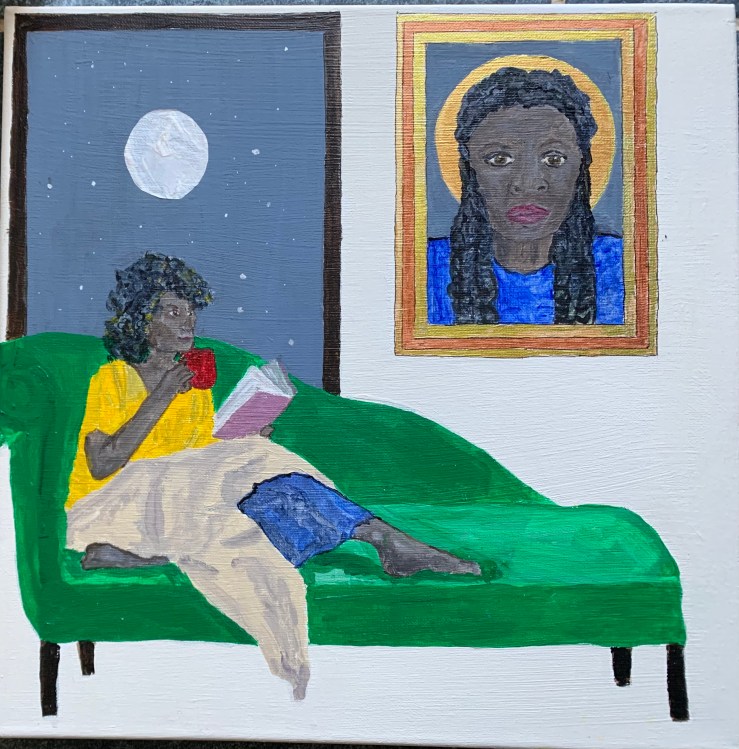

 Memorizing the Laws of Gravity