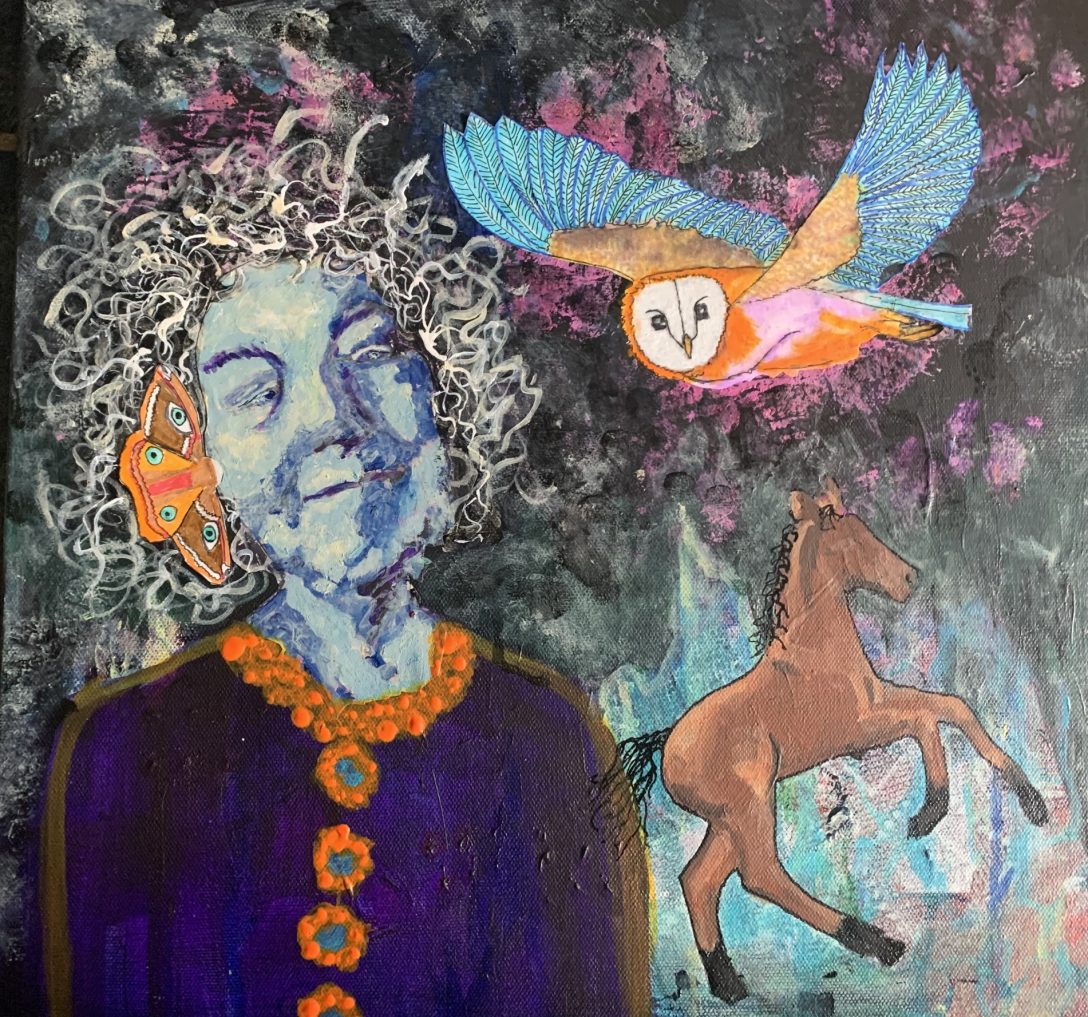

I have spent the last few months doing self-portraits in response to a prompt from my little group of artists that meet to show our works to one another and to talk about the Jungian images in them. Interestingly, the view of myself differed depending upon the day and the mood, the leaning of my mind, and the tendency of my heart. The first one (the one above) is the inner self, the song in the heart of stones, the twin aspects of conscious and unconscious in friendship.
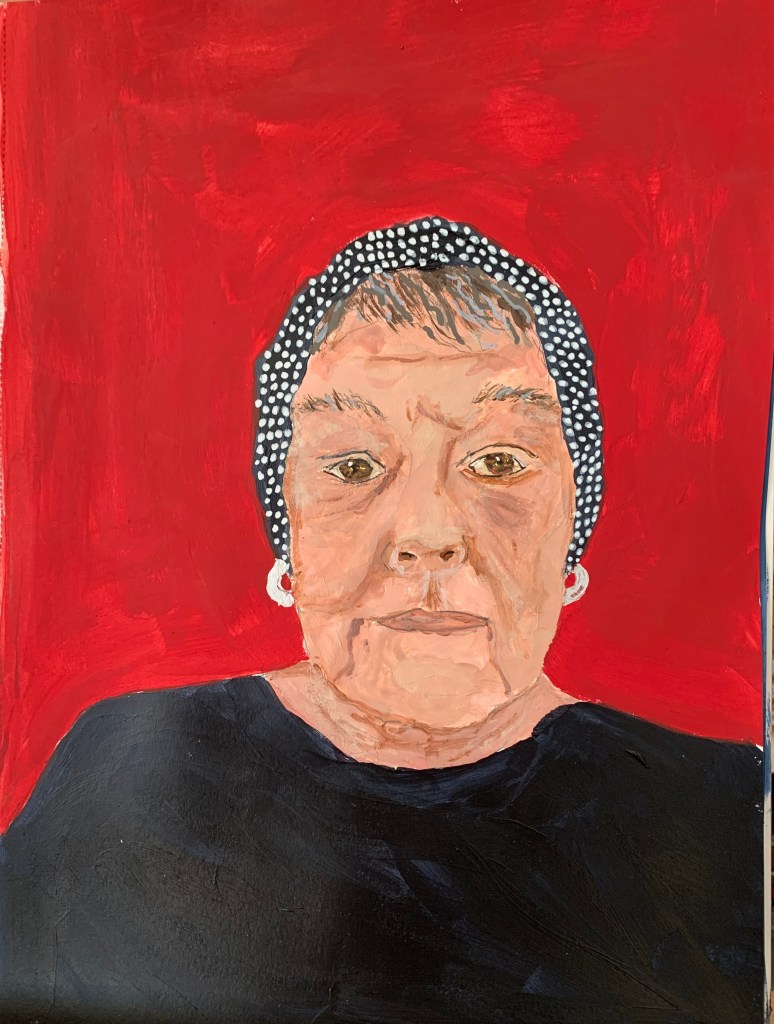
The second one is one with a life-model–me in a mirror, the only live thing in my house other than my cat Francis. While I was painting, I was concerned about the shapes I saw in my face and where the light was coming from. I wasn’t lamenting a sagging chin or the deepening nasal-labial lines. It led me to laugh about what had I been so concerned about: now my face is, well..my face. I kind of like it.
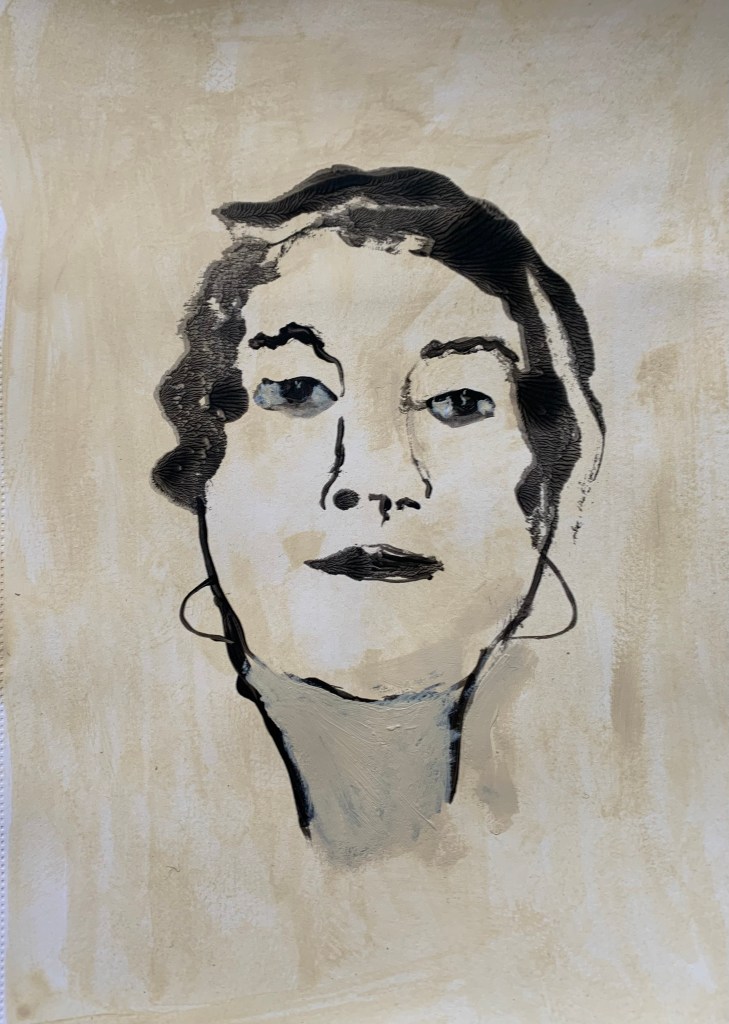
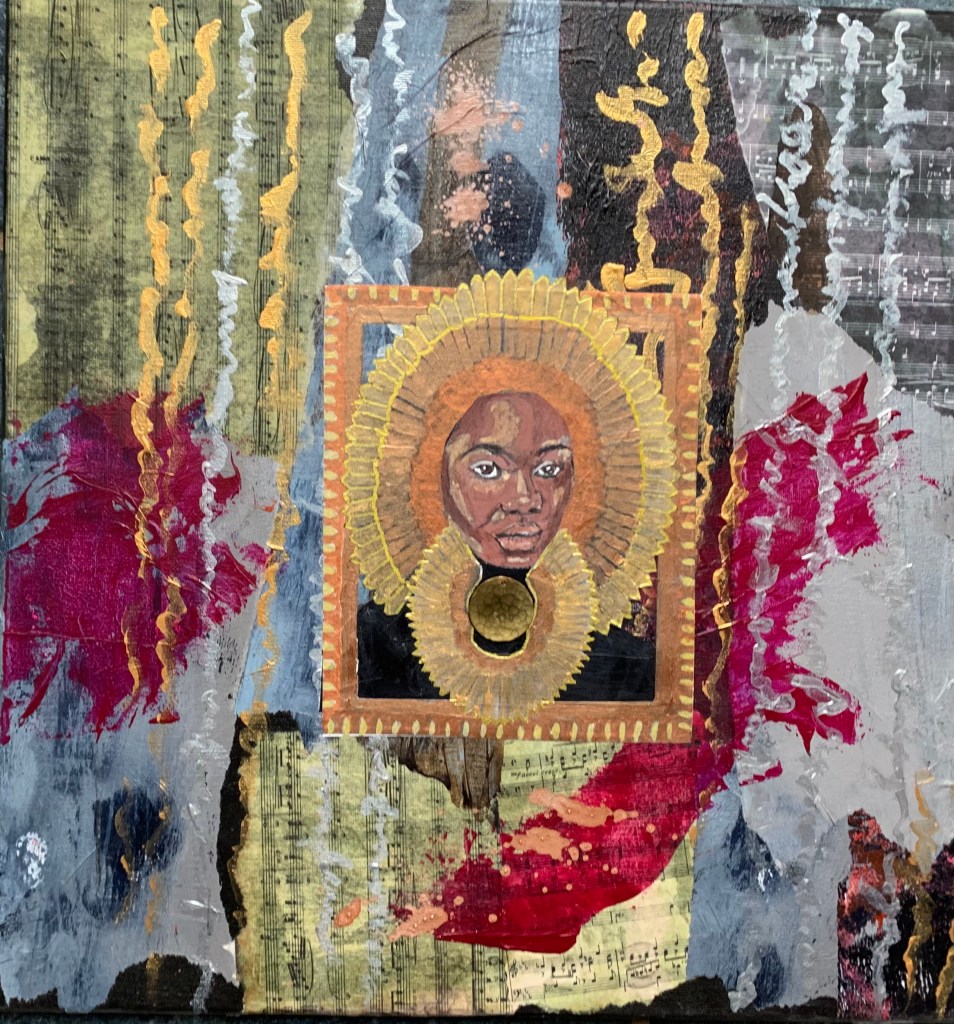
This one, a transfer from a painting on acetate, has a kind of dreamy feel to it. She reminds me of my grandmother and my Nowakowski kin. When I squint my eyes at the image in the page, I can almost hear my Uma’s powerful contralto voice unfurling like a moonflower, calling our Northwood neighborhood in to sleep to the phrases of Brahm’s Lullaby.
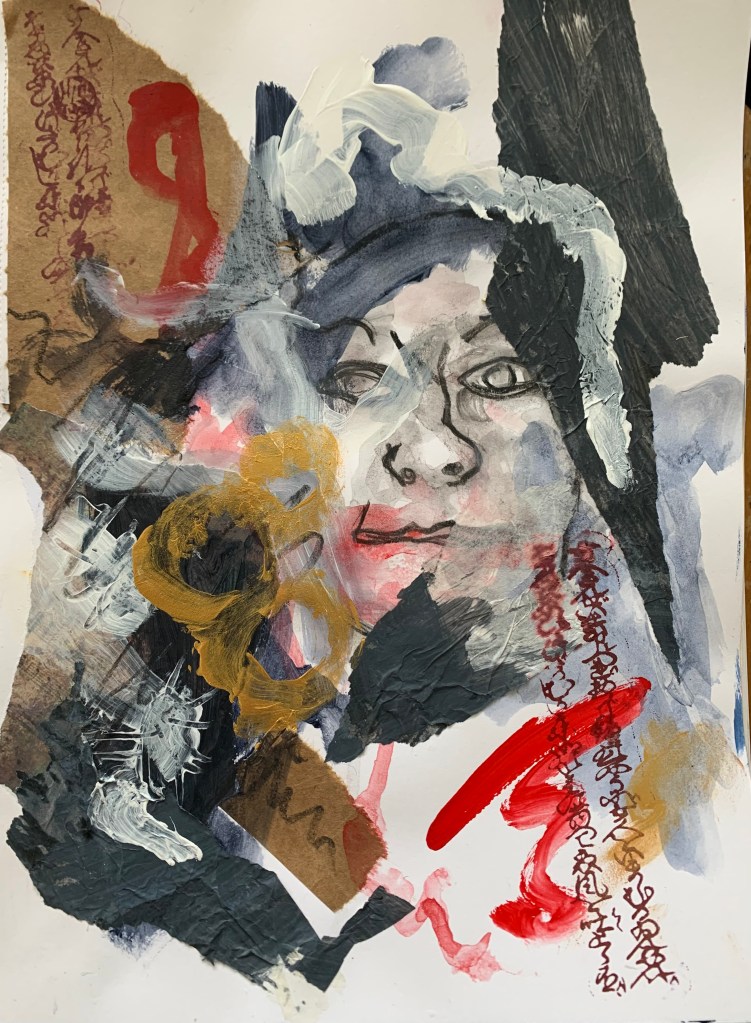
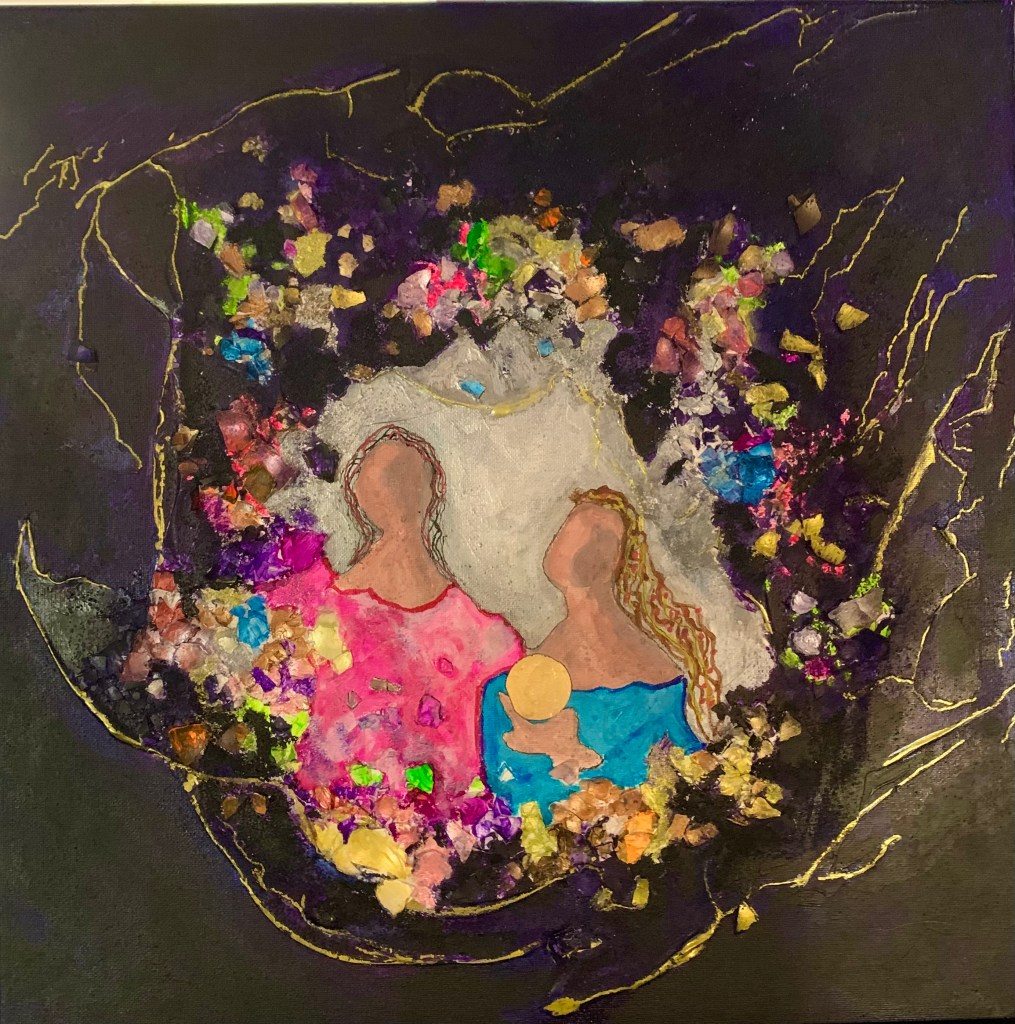
This is me falling apart. I do it often. I must have just watched the news before painting this one. I think it must have been particularly bad that day, but, really there are so many.
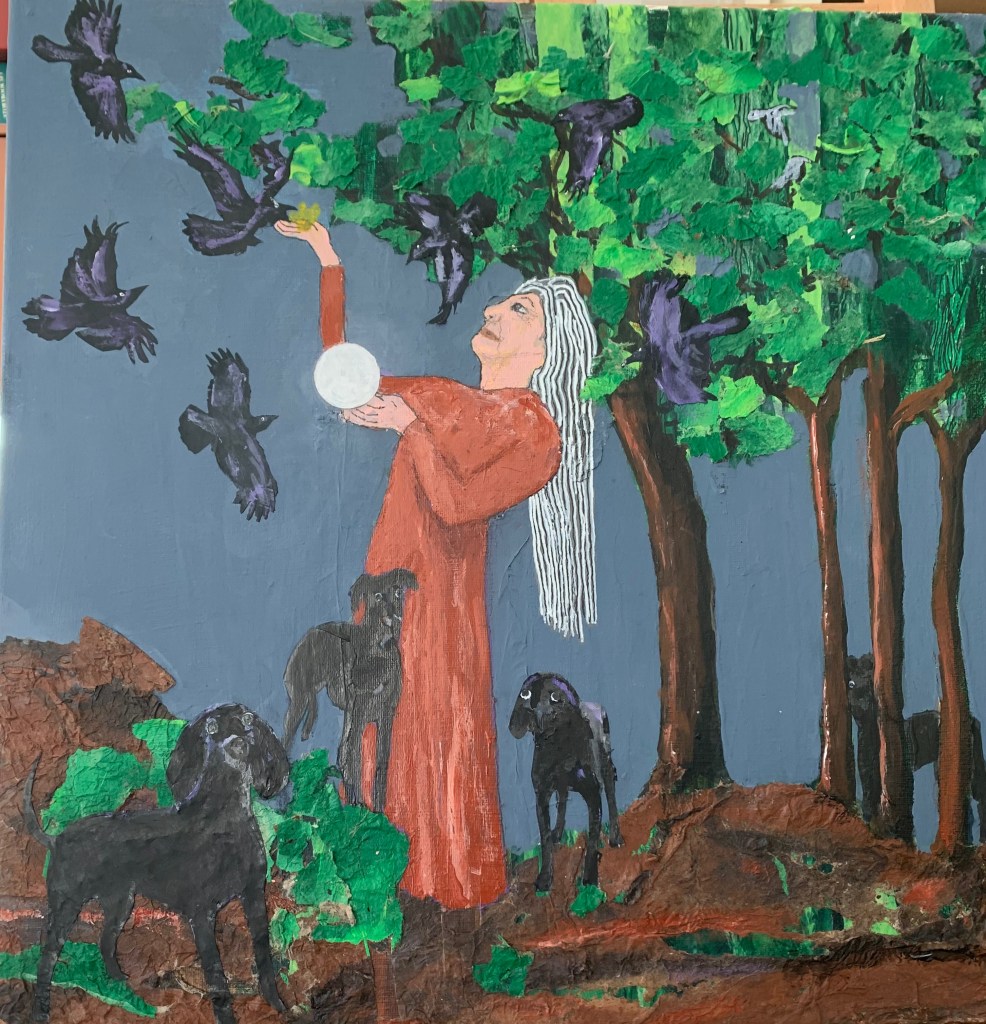
This final one is a painting not of me but of the archetypal energy that I am channeling in this stage of my living: The Crone. Also known as Hecate or the third stage of the moon’s triple goddess, the Crone hangs out with her crows and black dogs to bring an intense magic to the world touched by women of my age who know so much but also know that they know so little in the vast ocean of mystery.


 Memorizing the Laws of Gravity