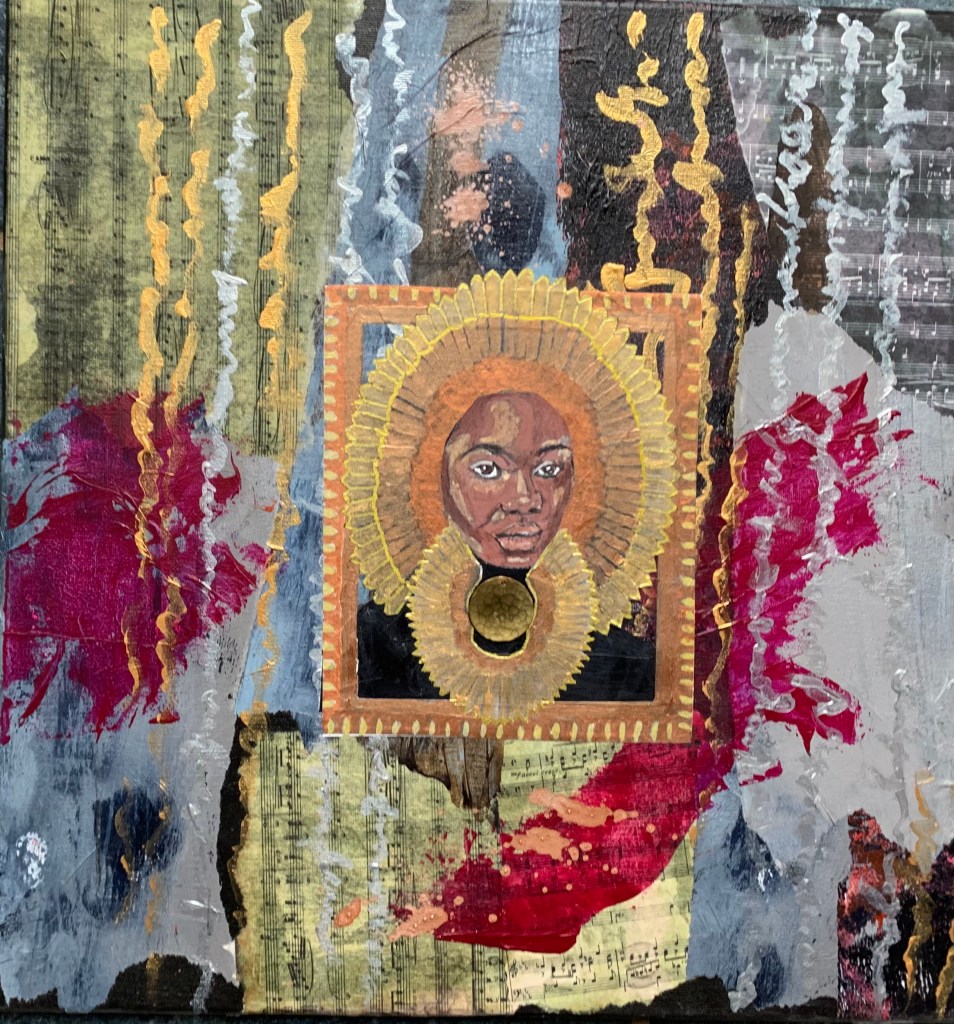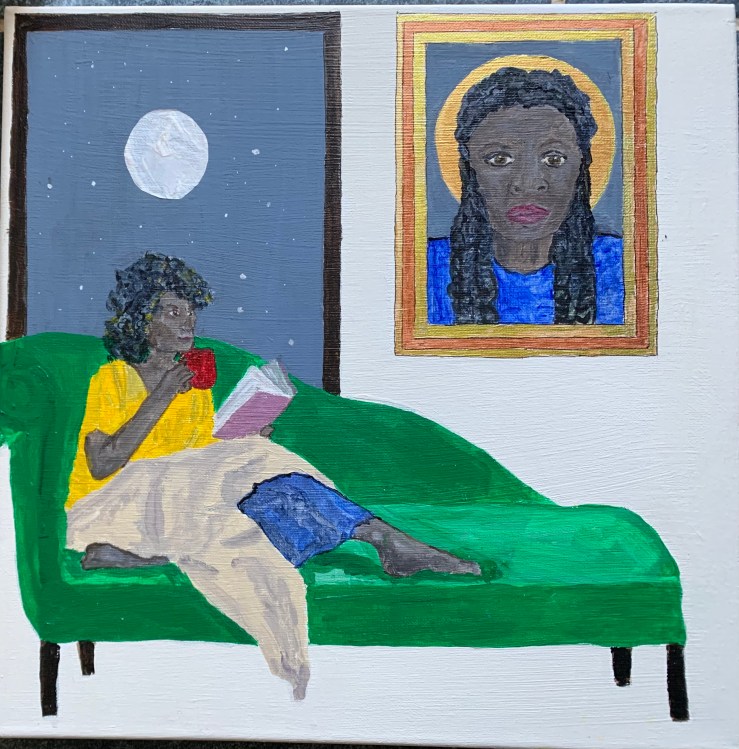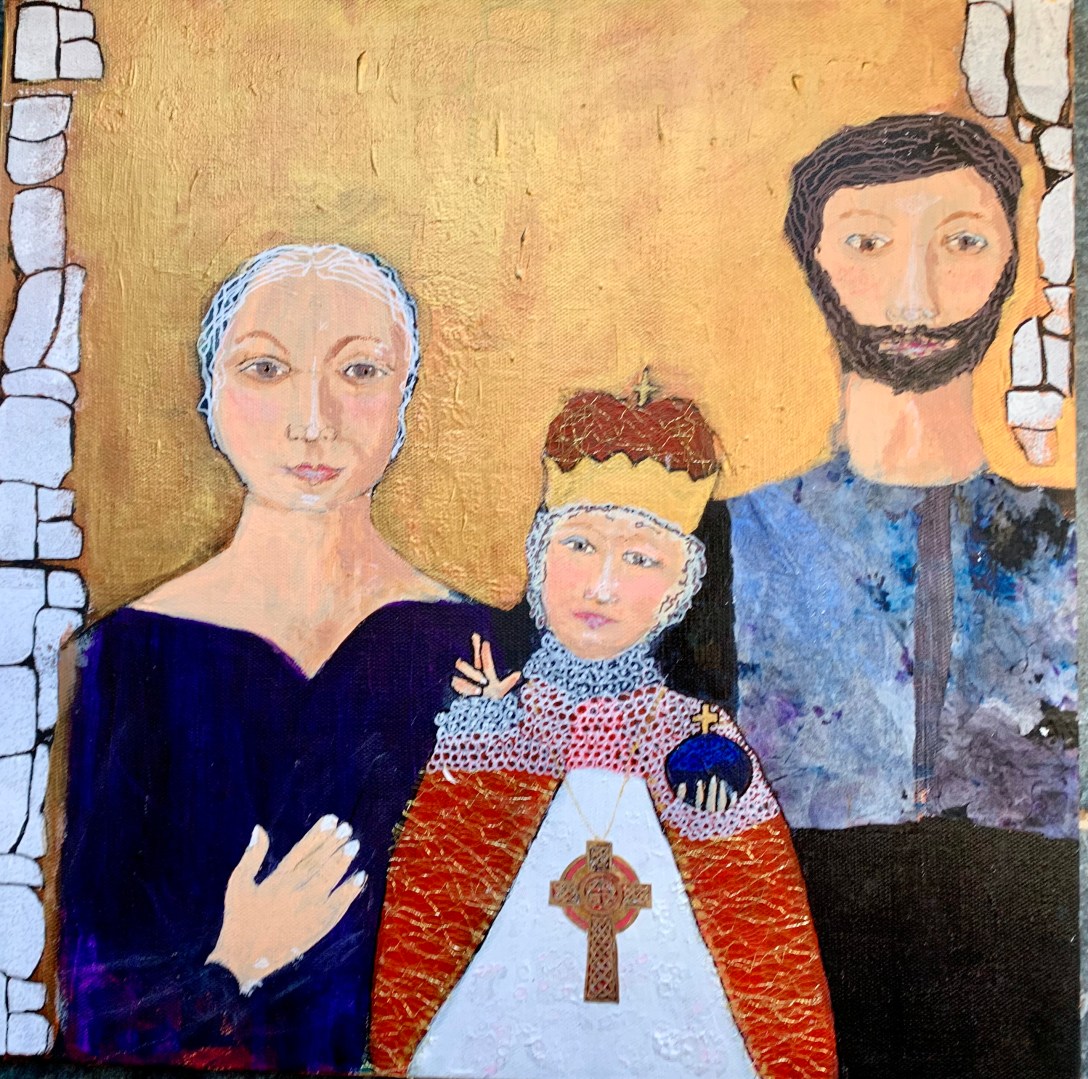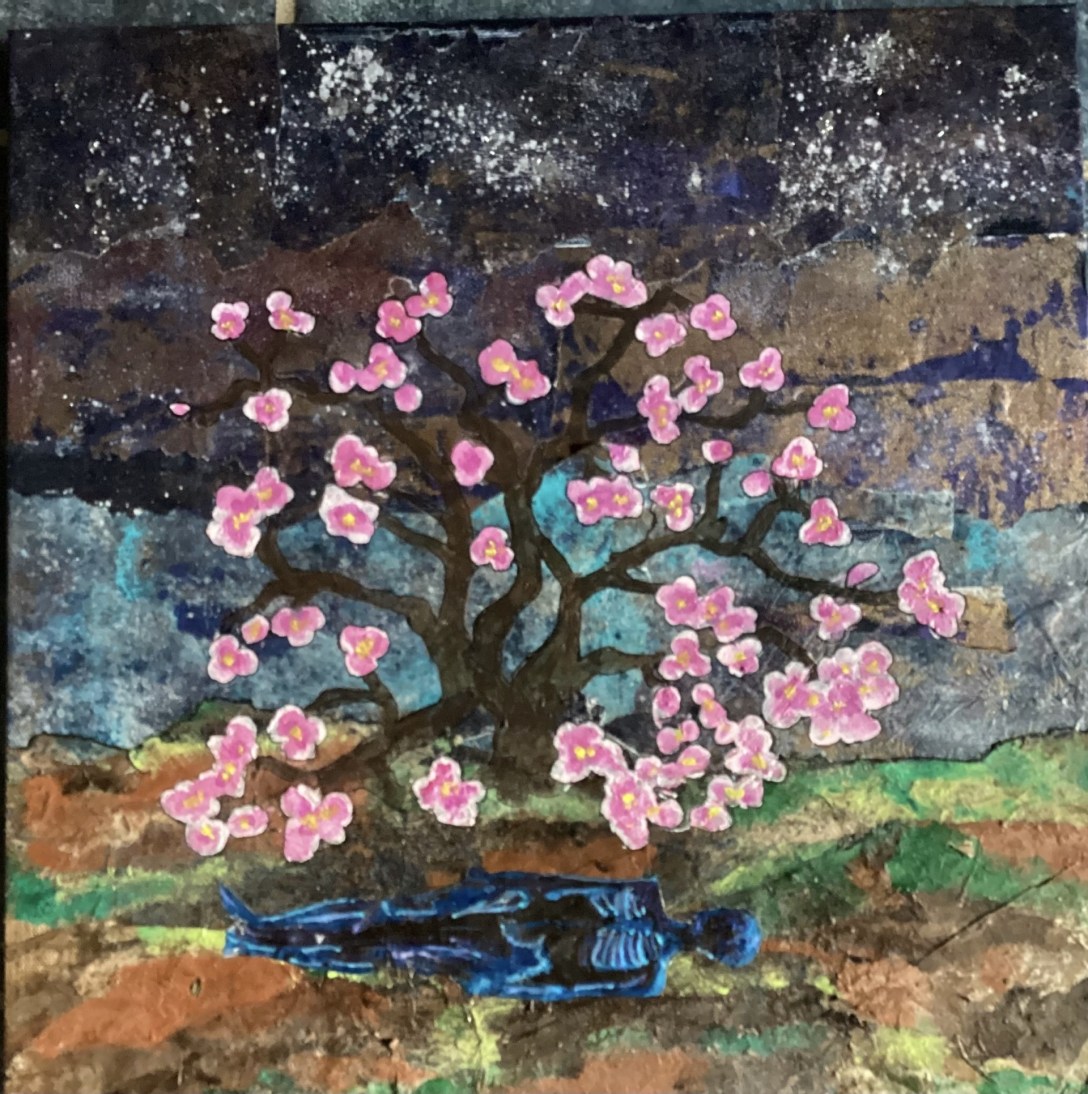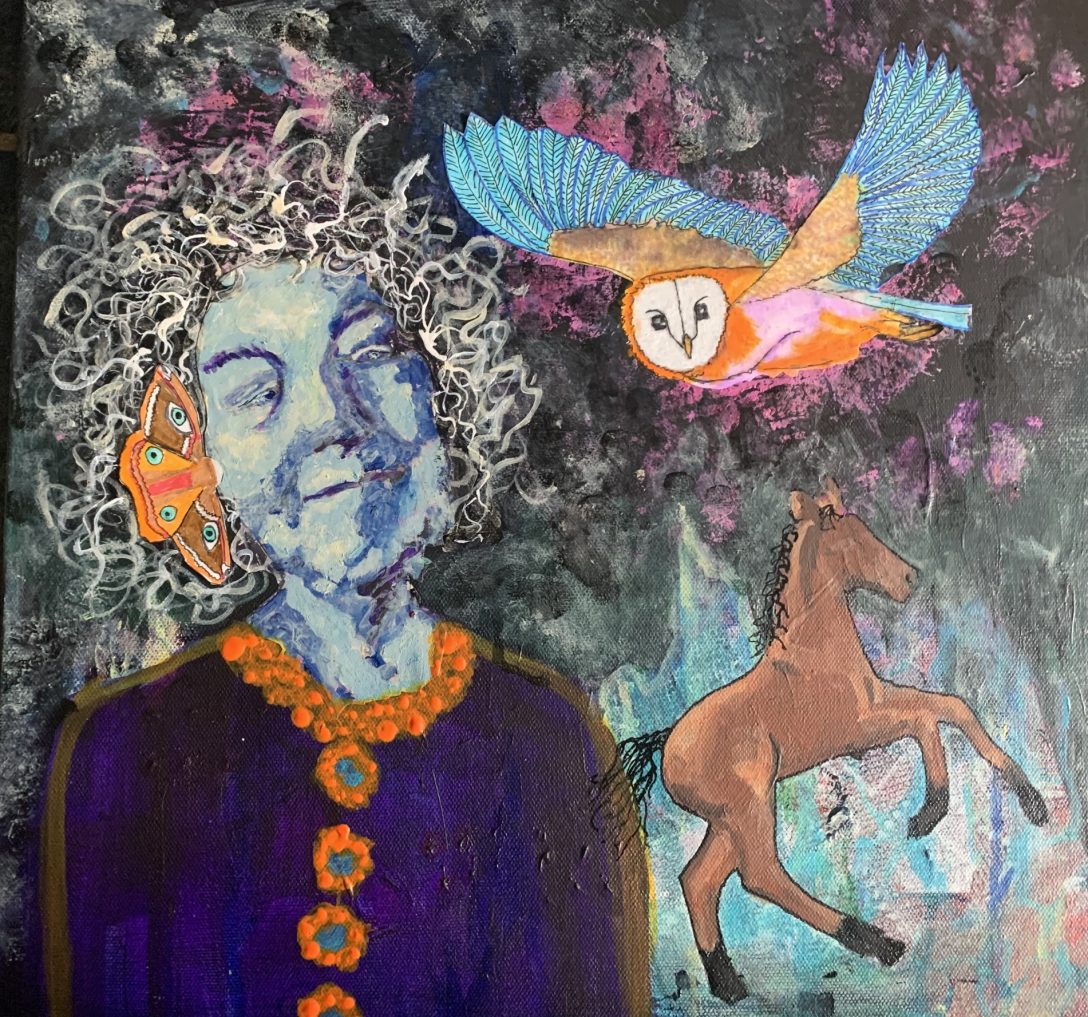
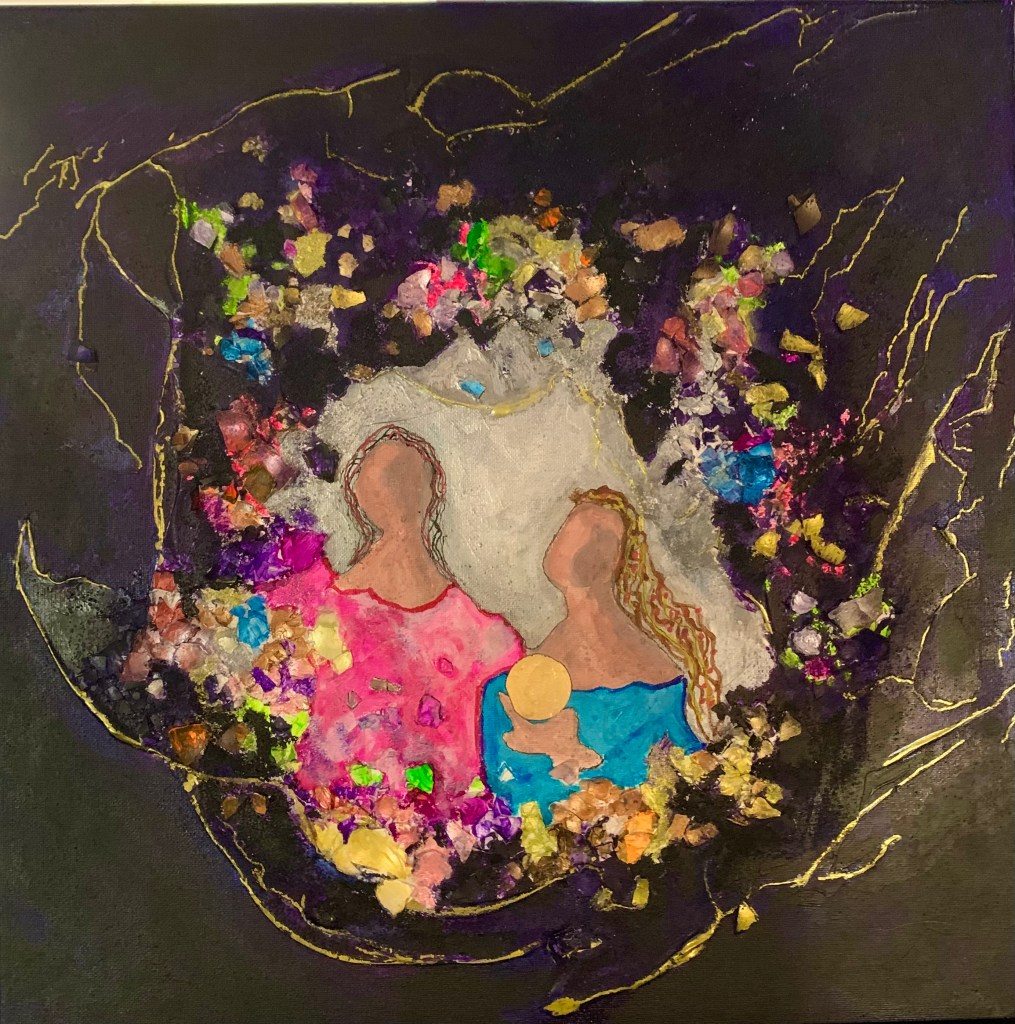
The Black Madonna Series

Dark Madonna

She knows in whose boredom the sun sleeps.
She studies space, fixes images in their absence,
hangs portraits the masters never saw
in their crafty light. Interrupts the talk
of dragonflies attending all creation.
She is the holder of pain, the unmoved target.

I wonder who this woman is
who moves as separately as silence,
who pauses to applaud a renegade dogwood,
red in still-green autumn, understands
the bloody revolution of ticking clocks,
the second-hand arrows that pierce
the flesh but leave it whole.

I hear her coming. She whispers between
the folds
of perception:
you will believe:
there is nothing left

but love.
-Kitty Yanson

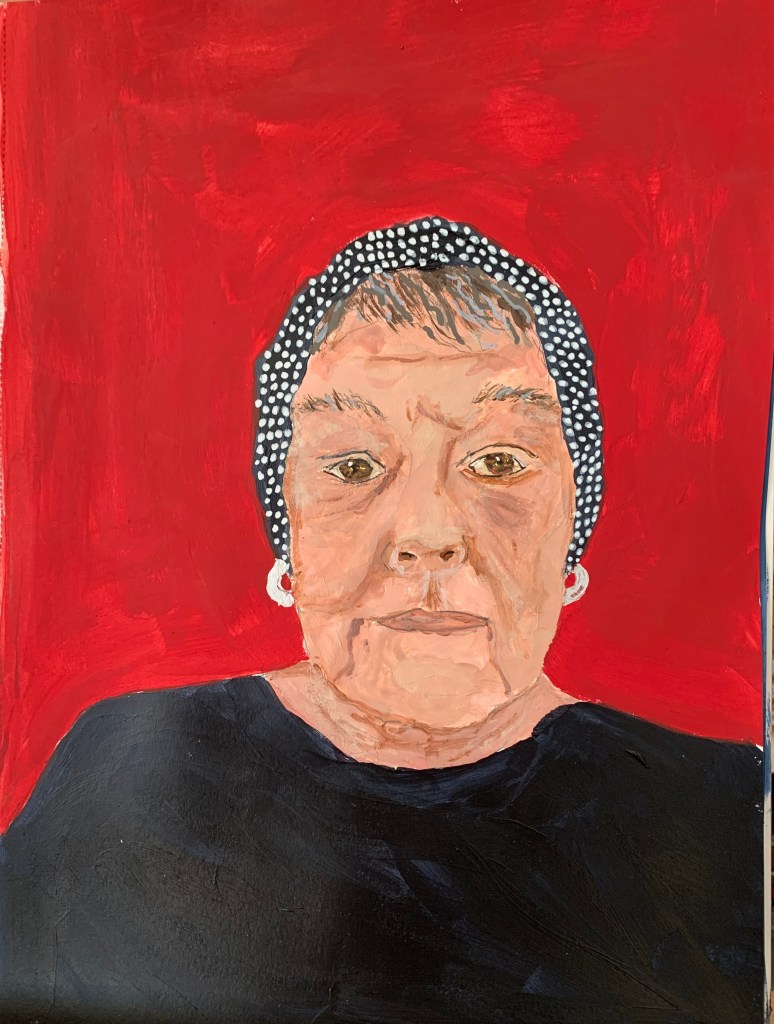
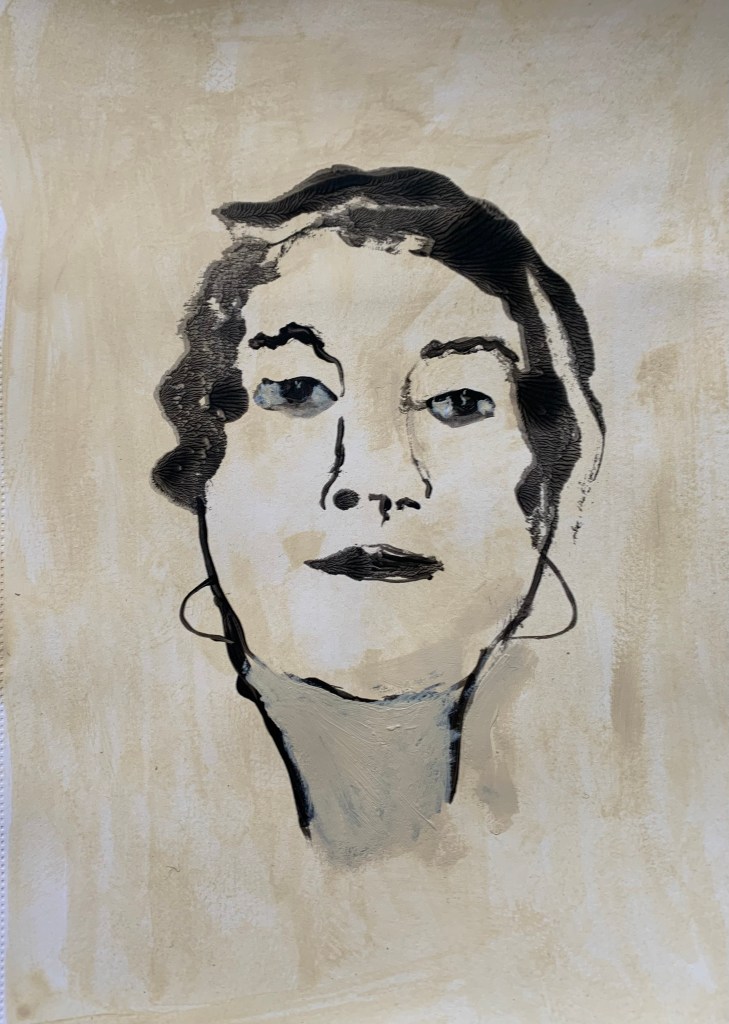
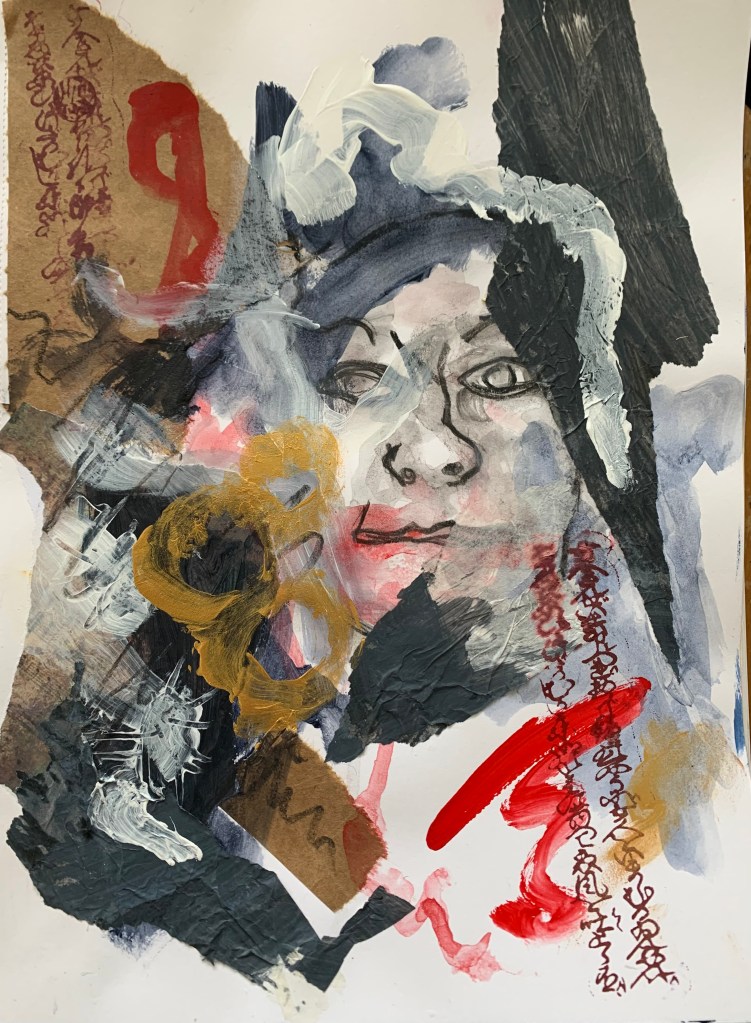
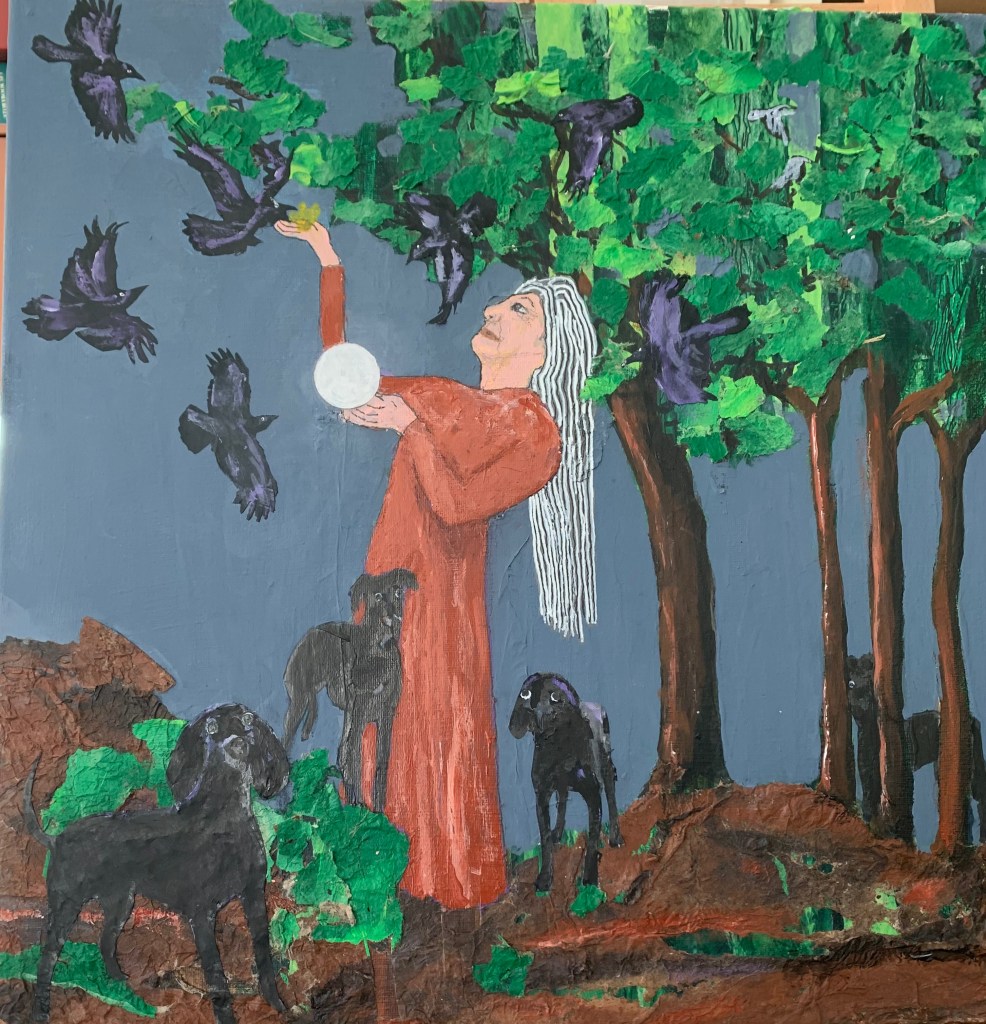
I first became acquainted with the Black Madonna sometime in the early 1980s after getting sober, after my divorce, when I was trying to get through depressive episodes without the liquid medication I had used to try to treat them. First, it was a picture of Our Lady of Czestochowa in my ancestral Poland which drew me toward her, then I searched out others, the Dark Madonnas of Spain, and the one enthroned in Chartres Cathedral. Eventually, I found that she was indeed an archetypal presence in the psyche, a sister of the Hindu Kali, the apocryphal Lilith, and the Egyptian Isis. In all of these forms, she embodies the union of opposites: life and death, spirit and matter, the conscious and the unconscious, body and soul. For me back then, she was the hope I had for healing and wholeness, and so she remains with me today, as I continue to find new ways to create while my body, beginning its 77th year this week, reminds me with a new ache every morning that mortality is destiny, a part of life. This image of this Great Mother, both womb and tomb, comforts me, sings me awake and to sleep in endless cycle of God. These three paintings are my way of exploring her great truth without words.

Ritual

When I was a child, I used to dress
and redress the body of the baby God,
Infant of Prague, with satin clothes
tailored to liturgical rhymes,
running my fingers across the hemline
rows of sequins, struggling to pull
the ruched armholes around the orb
of power his innocence cradled
in one tiny hand. I love you, Jesus,
I prayed as I returned his plaster vulnerability
to the altar atop my Uma’s chest of drawers.

In the afternoon after school, I met my friends
and a drafted brother or two to play Communion
in the basement, bribing my bros with chocolate
Jesus Necco Wafers giving the licorice ones
that nobody wanted to my ex-bestie Gerry
for some unremembered grievance,               
grabbing a bed-sheet from the laundry pile
as vestment across my outlawed priestly shoulders
to dole out sugar in lieu of transcendent mystery
around the sweet table of childhood.

But these were stories of another time
when I played with God, splashing
in the shallow waters of rituals’ river,
too young to swim in the deep end of faith.
Now I finger the decades,
counting faults and graces
bead upon bead, blurring
into wholeness in the rosary of my years.
I dress and redress again
that child of Prague, swaddling
his naked holiness in satin comfort
with sequins I have poorly sewn upon it,
now a broken princess playing with God
in second innocence repeating
and repeating the ongoing ceremony
of the all-along truth of love.
-Kitty Yanson

I Love This Getting Old

I forget a lot of what I read.
Some days I’ll fall madly for a moment, a phrase,
a word, then I’ll scuttle with compulsive curiosity
to find more meaning in all this. I’ll swat at a life-changing
articulation (I got you, you elusive bugger!),
then smoosh it like a drain fly smacked
against a kitchen wall to keep it, black and white, forever.
It is usually gone by bedtime.

Where do all these things go? Into unconscious
trash bins to hang out with used-up TV tropes
and winged horses and my flesh ballooning
like yeast dough rising, pressing against the
walls of dreams? Or do they just hide to jump
out dressed in white sheets and shouting BOO
in the middle of a conversation about which
is better with pan-fried, crispy gnocchi,
garlic spinach or roasted brussels sprouts?
I remember once (I think) that I woke up from sleep
in the middle of the night to scratch life’s meaning
onto the pad I kept at my bedside. In the morning
I looked: “Airedale.”

But maybe all the forgotten words are really seeds
that germinate in the dark to sprout one day
as a glorious dahlia or noxious weed in the garden of my being.
Or maybe they will one day gather with the quiet drones
of departed declensions of Latin nouns and (what?)
I ate for Tuesday’s dinner. Together we will stand around
the altar of my heart in the sanctuary of silence,
counting breaths and waiting for an Easter meaning to arrive.

                  -Kitty Yanson

Gangster’s Gift*

Before its leaves return in April’s sun,
the cherry tree flees the winter’s thuglike grip
with blossoms breaking from branches bare.
Was Al Capone aware that beauty springs
like this, unbidden, from naked bark when he
gave cherry trees in gratitude to weep
before the hospital that had agreed
to treat his curse of Venus, residual
remuneration from early gangster days
as brothel bouncer in old Chicago Town.
One tree remains, and every April now
this seasoned moll on a Baltimore street
joyously vamps her coy pink hair to the ground.

Was this gift his feeble shot at goodness?
Or did Capone’s decaying brain forget
he ordered massacres in lieu of roses
to celebrate the yearly feast of love?
Perhaps, recumbent now in his deep, big sleep,
he dreams of galaxies of rosy blooms
that briefly flirt with air, then petals fall,
implanting stars of blushing pink to feed
with constellations of rotted grace
the bloodstream of a forgiving earth.

My questions, too, are shaken to the ground,
and quiver from the strain of evil mixed with good.
But when this April’s sun enshrouds the chill,
a blessed moment comes, and I forget to think
as beauty stuns from being’s leafless stem.

-Kitty Yanson

* Al Capone was paroled from Alcatraz to receive treatment for his advanced neurosyphilis. First, he sought out Hopkins that was well-known for advances in this area. However, they did not take him on because of Capone’s notoriety. Union Memorial Hospital in Baltimore did treat him, and in gratitude, Capone gave the hospital two weeping cherry trees. One has survived and blooms every year in April on 33rd Street at the hospital’s former entrance.